
Music As Prayer
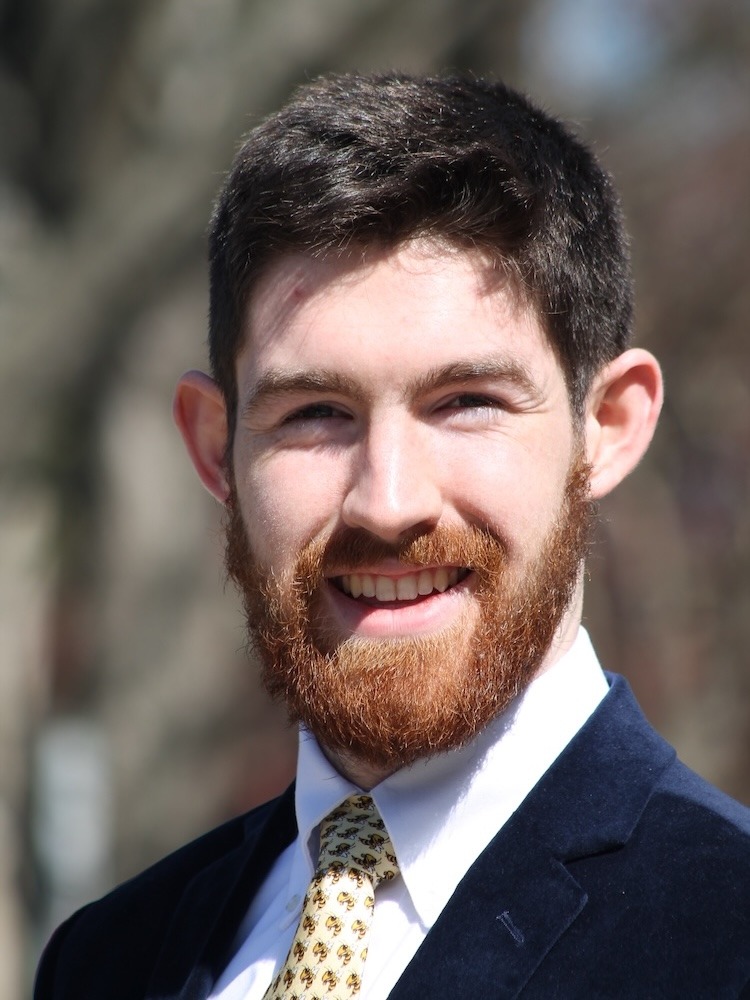
By: Daniel Buckley, M.S., Electrical and Computer Engineering ’25, B.S., Electrical and Electronics Engineering ’24
Written on: January 27, 2025
The bells ring and “Da pacem, Domine” (“Give peace, O Lord”) resounds through the sanctuary as the 9:30am Sunday Mass begins in the fall of 2020. I had started Georgia Tech a few weeks earlier and was still trying to find my place when I found myself singing this chant that would start a journey that has brought me closer to God.
For those who do not know me, my name is Daniel Buckley, and I am a first year Masters student in Electrical and Computer Engineering graduating in May 2025. When I arrived at Tech in August of 2020 as an undergraduate student, I knew I wanted to help the liturgy through music because I have always encountered God through its beauty. Originally, I planned to audition for playing piano at the 11:30am Mass where the songs are traditional hymns; however, I missed my audition slot. Later that day, I happened to meet Ben Dollar, the leader of the 9:30 choir, while playing piano in the sanctuary. He asked if I knew how to sing, and, after proving I could, he invited me to join the choir.
At my first rehearsal with the group, I came knowing practically nothing about Gregorian Chant or Renaissance polyphony. I walked out of rehearsal with a deep love of the music, knowing I had discovered something truly beautiful. The chant, sung throughout the Mass, with its ancient melodies and flowing, timeless nature complements the structured form of the liturgy. The polyphony adds to its beauty with each voice’s complex melodies weaving against the others in a intricate dance of ever-changing harmonies. When I first sang the polyphony, I thought to myself, “this makes sense!” and after four and a half years, my opinion has not changed. If anything, I have grown in love of the music as I learned more.
Over time I came to appreciate the blessing that I could sing chant and polyphony and share their beauty with others. Tech has a large number of talented singers with a high level of musicality who can learn a fairly new set of reasonably foreign music each week. I say ‘reasonably foreign’ because chant and polyphony are fairly peculiar to the Catholic Church and unheard in modern times. Unlike contemporary Christian music, which you can listen to on the radio, or hymns, which are common across Christianity, unless you actively search it out, you will not hear the ancient music that for so many generations has brought people closer to God. By His grace, the CC has the space for this music to be sung when most other churches do not.
As my first semester drew to a close, most of the choir left, leaving three of us to carry on. As always, the Lord provides, and over the next few years, the choir has grown. I have come to learn that this is the cycle of things: the group starts and over time grows large and talented, then most move on and leave a small remnant which must grow again.
In the spring of my sophomore year, I took charge with a choir barely large enough to sing polyphony but with musicians capable of doing so. Leading a choir was new to me, and I am thankful for the opportunity to grow into the position. Fortunately, we sing chant, so most of the music for each Sunday was set centuries ago. Picking and running the music taught me a great deal about the structure and beauty of the Mass which has helped me pray the Mass better.
I am exceeding thankful that the 9:30 choir has been an integral part of my life. Every aspect of it has been an invitation to draw closer to God, and I pray the music we sing invites others closer as well.


